


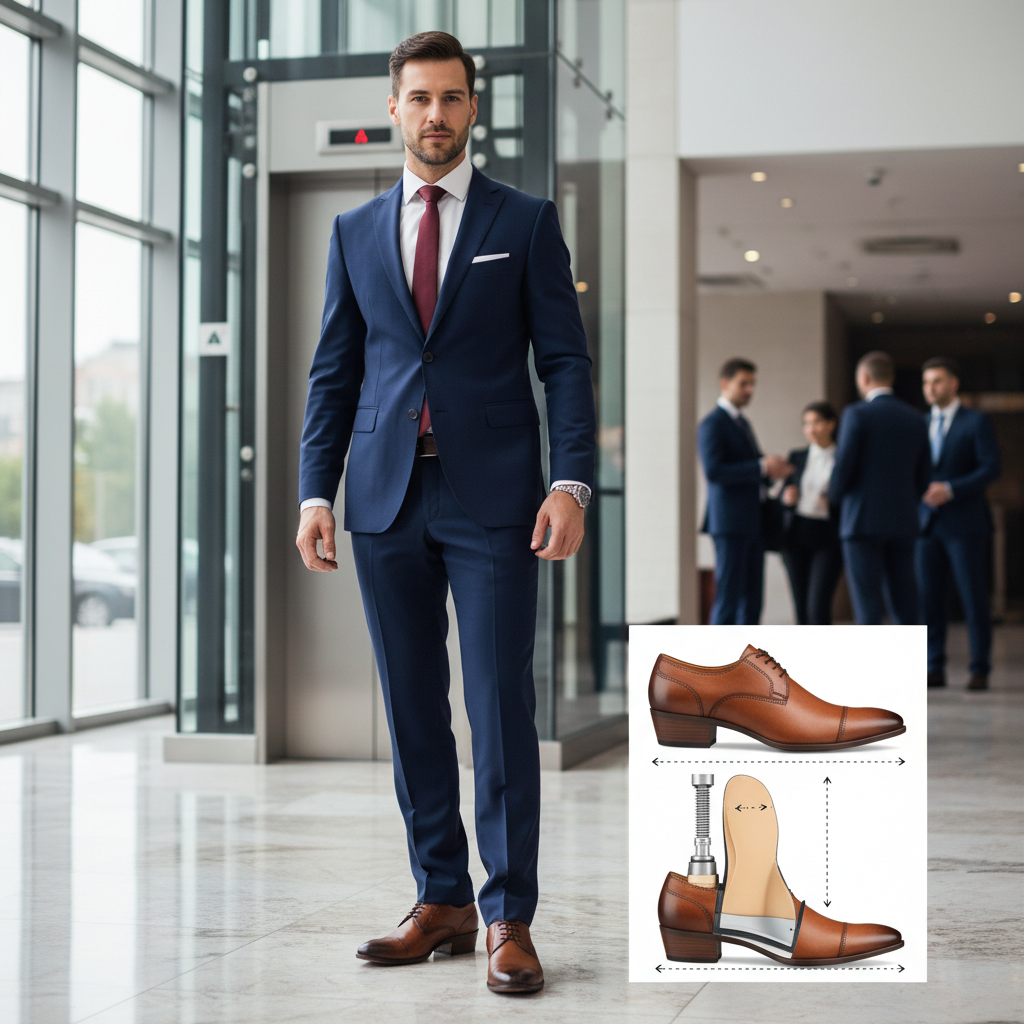
Elevator shoes have been around for decades, yet many people still misunderstand what they are and how they actually work. At first glance, they look like ordinary dress shoes, sneakers, boots, or loafers. The difference is hidden inside the shoe structure, where a discreet internal lift adds extra height to the wearer without drawing attention. For men and women who want to gain a few centimeters in a subtle and elegant way, this category of footwear has become a practical solution that combines style, confidence, and comfort.
Unlike visible platform shoes, elevator shoes are designed to preserve a natural external appearance. The height increase is integrated into the shoe through an internal insole or lifted construction that raises the foot inside the shoe. This means the shoe can still look refined and proportionate from the outside while providing a noticeable change in the wearer’s stature. For many buyers, the appeal lies not only in the added height but also in the improved posture and self-assurance that often come with it.
What elevator shoes actually are
Elevator shoes, also called height-increasing shoes, are footwear designed with an internal lift that makes the wearer appear taller. The lift is not a simple removable insole placed inside a standard shoe; in quality models, it is an integrated design element that works with the shoe’s shape, lining, and sole construction. This technical approach helps maintain comfort while keeping the elevated effect hidden.
The main idea is simple: the foot rests slightly higher inside the shoe, which changes the body’s overall vertical alignment. Depending on the model, the extra height can range from around 5 cm to 10 cm, or roughly 2 to 4 inches. Some brands specialize in more discreet lifts, while others offer more pronounced height increases for those who want a stronger visual effect.
What makes elevator shoes different from ordinary shoes is the engineering behind the sole and insole combination. The lift must be integrated carefully to avoid an unnatural silhouette, uncomfortable pressure points, or instability while walking. That is why brands with experience in this niche often focus heavily on craftsmanship, materials, and ergonomic balance.
How the height increase is created
The mechanism behind elevator shoes is more sophisticated than many people assume. In most cases, the shoe contains a raised internal structure under the heel and midfoot area. This means the wearer’s heel sits higher than it would in a standard shoe, which creates an immediate increase in visible height.
The lift is usually concealed by several layers of design. First, the outer sole gives the shoe the appearance of a normal model. Second, the internal insole is shaped to support the foot and distribute pressure evenly. Third, the upper part of the shoe is built to accommodate the higher position of the foot without causing the heel to slip or the foot to feel cramped.
When done well, this structure creates a natural-looking posture. The body stands a little taller, the legs appear longer, and the wearer often feels more upright. Good elevator shoes also account for walking mechanics, which is important because a poorly made height-increasing shoe can feel stiff or unstable. Quality footwear in this category aims to avoid that problem through thoughtful design and materials that support all-day use.
Why people choose them
The motivations for wearing elevator shoes vary widely. Some people simply like the extra height, while others want a stronger presence in professional or social environments. Height can influence how people feel about themselves, and for many wearers, being a few centimeters taller changes the way they carry themselves in daily life.
Some common reasons people choose elevator shoes include:
- To gain height instantly without surgery or other invasive methods
- To improve posture and body alignment
- To feel more confident in business, dating, or public settings
- To create a more balanced silhouette in formal clothing
- To wear elevated footwear discreetly without attracting attention
In practice, the psychological benefit is often just as important as the physical one. A well-designed pair of height-increasing shoes can help wearers feel more self-assured at work, at events, or in everyday life. Because the increase is hidden, the effect remains discreet and elegant rather than obvious.
Mario Bertulli and the evolution of height-increasing footwear
Among the most established names in this niche, Mario Bertulli stands out as a European reference point. Founded in 1972, the brand has spent more than 50 years refining elevator shoe design, combining Italian craftsmanship with technical innovation. Based in Monaco and operating internationally, the company has built a reputation around discreet height-increasing shoes for both men and women.
The brand’s central promise is straightforward: provide shoes that allow wearers to gain height instantly, typically between +5 cm and +10 cm, while keeping the external look close to that of a conventional premium shoe. That balance between invisibility and function is the key to the brand’s identity.
Mario Bertulli’s approach is not limited to one style or one audience. Its catalog covers formal and casual needs, from polished business shoes to relaxed sneakers and seasonal models. This variety matters because users do not want to reserve elevator shoes for special occasions only; many want them to fit seamlessly into daily life.
If you are looking for elevator shoes for men, the brand offers a broad selection designed to suit different contexts, from office wear to weekend outfits. The idea is to make height-increasing footwear feel less like a niche product and more like a normal part of a modern wardrobe.
Different styles available today
One of the strongest advantages of contemporary elevator shoes is the range of styles available. Early versions of height-increasing footwear were often bulky or limited in design, which made them easy to spot. Today, brands such as Mario Bertulli have expanded the category into multiple product lines that look and feel much closer to standard footwear.
Typical collections include business-oriented models such as Oxfords, Derbies, and loafers. These are especially popular with professionals who want a subtle height boost in formal environments. The shoes maintain a refined profile, which is important for suits, tailored trousers, and smart casual outfits.
Casual wear is also well represented. Sneakers, trainers, and boat shoes bring the same height-increasing technology into more relaxed settings. These models are often preferred by people who want all-day comfort while maintaining a discreet lift. Their design tends to be lighter and more flexible, making them suitable for errands, travel, and social outings.
Some collections are more specialized. A line such as Urbano may focus on contemporary urban styling, while seasonal assortments can include sandals or boots. There is also a dedicated range for women, reflecting the fact that interest in height-enhancing footwear is not limited to men.
What makes a good elevator shoe comfortable
Comfort is the most important technical challenge in this category. Adding height changes the way weight is distributed across the foot, so the shoe must be designed to compensate for that shift. The best models do this through careful shaping, quality materials, and sole construction that supports natural movement.
A comfortable elevator shoe should provide:
- Stable support under the heel and arch
- Enough internal space to avoid pressure on the toes
- A secure fit that prevents slipping at the back of the shoe
- Flexible walking mechanics that reduce fatigue
- Breathable materials for longer wear
Brands investing in newer technology have started to improve the walking experience significantly. Mario Bertulli’s recent “New Technology 2025” is a good example of how the category is evolving. The idea behind this update is to make the shoes lighter, more comfortable, and more durable while preserving the hidden lift effect. According to the brand, the latest models are around 30% lighter than traditional elevator shoes and are designed to feel more responsive during movement.
That kind of innovation matters because users increasingly expect elevator shoes to function like everyday footwear, not specialized accessories that must be tolerated for the sake of height. The more natural the walking experience, the more likely people are to wear the shoes regularly.
Durability, hygiene, and long-term wear
Modern elevator shoes are also expected to withstand regular use. Since the internal lift changes the load on the sole, durability becomes a critical concern. A well-made shoe should maintain its structure over time, even with frequent wear. Strong materials, reinforced construction, and resilient outsoles help extend the life of the product.
Some newer models are also designed with hygiene in mind. Features such as temperature regulation and odor reduction make a significant difference for people who wear the shoes for long periods. This is particularly relevant in business settings, travel, or any situation where the shoes may be worn for an entire day.
Mario Bertulli notes that certain soles in its 2025 technology line are engineered to withstand loads of up to 250 kg, which reflects a focus on structural reliability. For the customer, that means the shoes are not just about appearance; they are intended to function as robust, daily-use footwear.
Shopping experience and customer service
Another reason brands in this category have grown is the improvement in the buying experience. In the past, customers often worried about hidden costs, uncertain sizing, or difficult return policies. Today, established brands try to remove those barriers with clearer service and more transparent delivery terms.
Mario Bertulli, for example, emphasizes international service with free delivery in France and select European countries, free returns on the first order in certain EU regions, and secure payment methods including PayPal and installment options. The brand also indicates that duties and taxes are typically included in the price, which helps avoid unpleasant surprises at delivery.
This kind of structure makes the purchase feel more accessible, especially for first-time buyers who may be hesitant to try elevator shoes without seeing them in person. In a market where fit and comfort matter so much, return options and dependable shipping play an important role in customer confidence.
Are elevator shoes noticeable
For many prospective buyers, the first question is whether elevator shoes can be detected by other people. In well-designed models, the answer is usually no, or at least not easily. The key is proportion. If the shoe’s shape, heel height, and upper design are balanced properly, the extra lift remains discreet.
That said, highly exaggerated lifts can be harder to hide, especially if the wearer chooses a style that is too extreme for their frame or clothing. The most natural effect usually comes from moderate height increases, thoughtful styling, and shoes that match the occasion. Formal models tend to conceal the lift more easily because their structure is already more refined and enclosed.
The wearer’s confidence also affects how noticeable the shoes are. People who walk naturally and choose the right fit usually project a more convincing result than those who appear to be compensating or walking awkwardly. This is another reason why comfort and ergonomics are as important as the height boost itself.
Who elevator shoes are best suited for
Elevator shoes are suitable for a wide range of people, but they are especially appealing to those who want added height without changing their appearance dramatically. Professionals, style-conscious individuals, event attendees, and anyone seeking a subtle confidence boost may find them useful.
They are also a practical choice for people who want variation in their wardrobe. For example, someone may prefer a formal pair for work, a casual pair for weekends, and a seasonal style for specific weather conditions. The flexibility of today’s collections makes it easier to integrate height-increasing shoes into different lifestyles.
Women’s elevator shoes have also become more visible in the market, reflecting changing expectations around fashion and comfort. In this sense, the category is no longer limited to a niche male audience. It is evolving into a broader footwear segment with multiple applications and style profiles.
The future of height-increasing footwear
The evolution of elevator shoes suggests that the category is moving beyond novelty and into mainstream lifestyle footwear. Better materials, lighter constructions, improved hygiene features, and more varied styles are helping brands create shoes that feel relevant to modern consumers. The emphasis is increasingly on wearability, not just hidden height.
That shift is important because buyers today expect more from specialty footwear. They want products that look good, feel good, and last. Brands with long experience in the field, such as Mario Bertulli, have a clear advantage because they combine tradition with innovation. Their longstanding expertise allows them to refine the mechanics of hidden lifts while responding to contemporary expectations around comfort and performance.
In practical terms, elevator shoes work by discreetly elevating the foot inside a well-constructed shoe, which increases the wearer’s apparent height while maintaining a natural exterior. When designed correctly, they can enhance posture, confidence, and style without sacrificing everyday comfort. For many people, that balance is exactly what makes them appealing.